If you’re someone who enjoys cinema as an art form, you’re in the right place.
For me, cinema is a form of art and not a cheap entertainment.
Choosing the right movie is an experience in itself. I often spend more time selecting a film than actually watching it. I’m not into the usual commercial blockbusters—what I look for is depth, message, and cinematic brilliance.
My taste leans toward Hollywood classics, dark and noir cinema, and movies that leave something behind—an emotion, a question, a reflection. I believe the best films don’t just entertain, they provoke thought.
I’ve always been drawn to the works of directors like Stanley Kubrick, Martin Scorsese, Quentin Tarantino, and beyond Hollywood, to legends like Andrei Tarkovsky, Ingmar Bergman and Satyajit Ray. Their storytelling styles—bold, layered, and often philosophical—resonate deeply with me.
This page contains a list of 100 thoughtfully selected movies and few web series that reflect my personal taste in cinema.
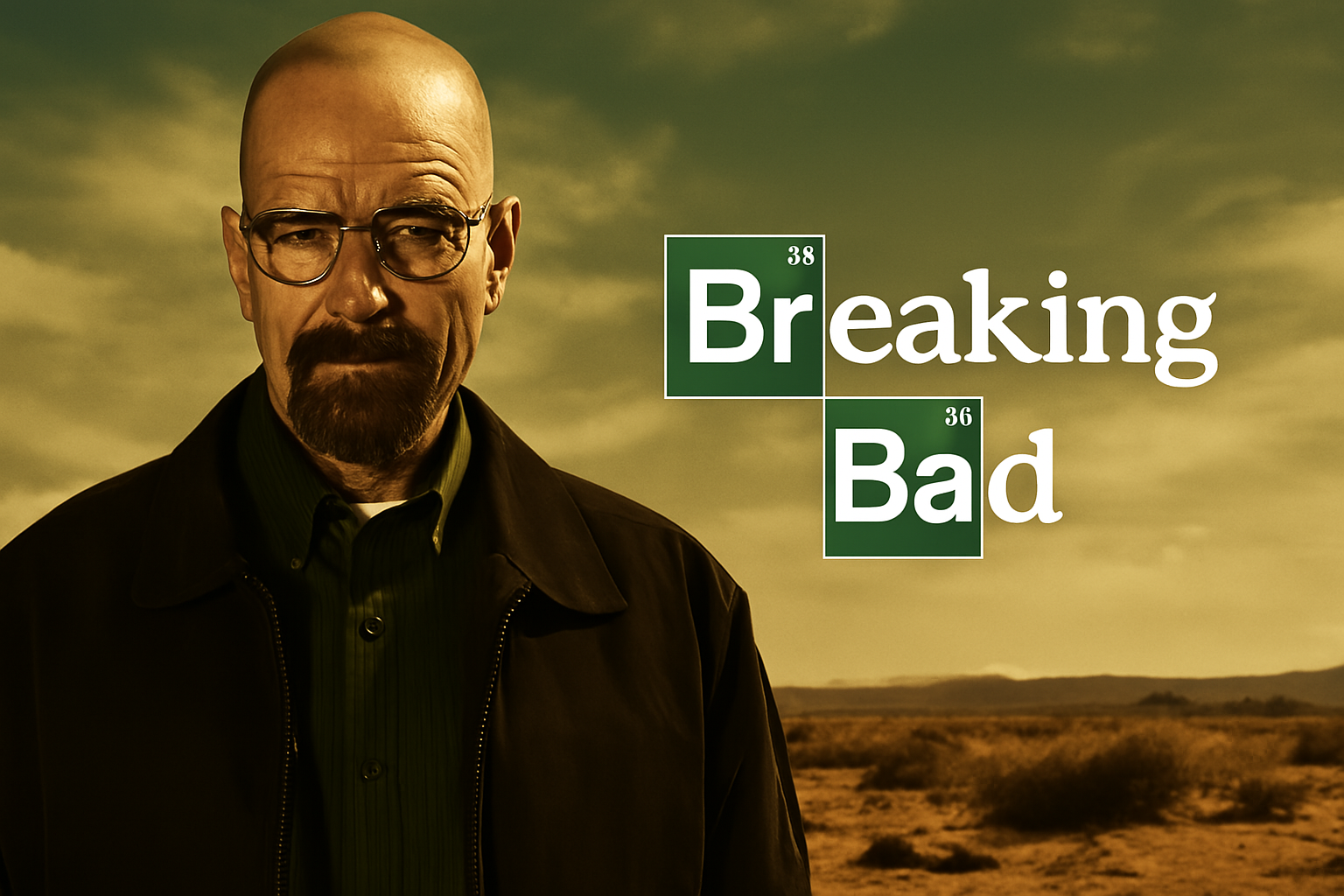
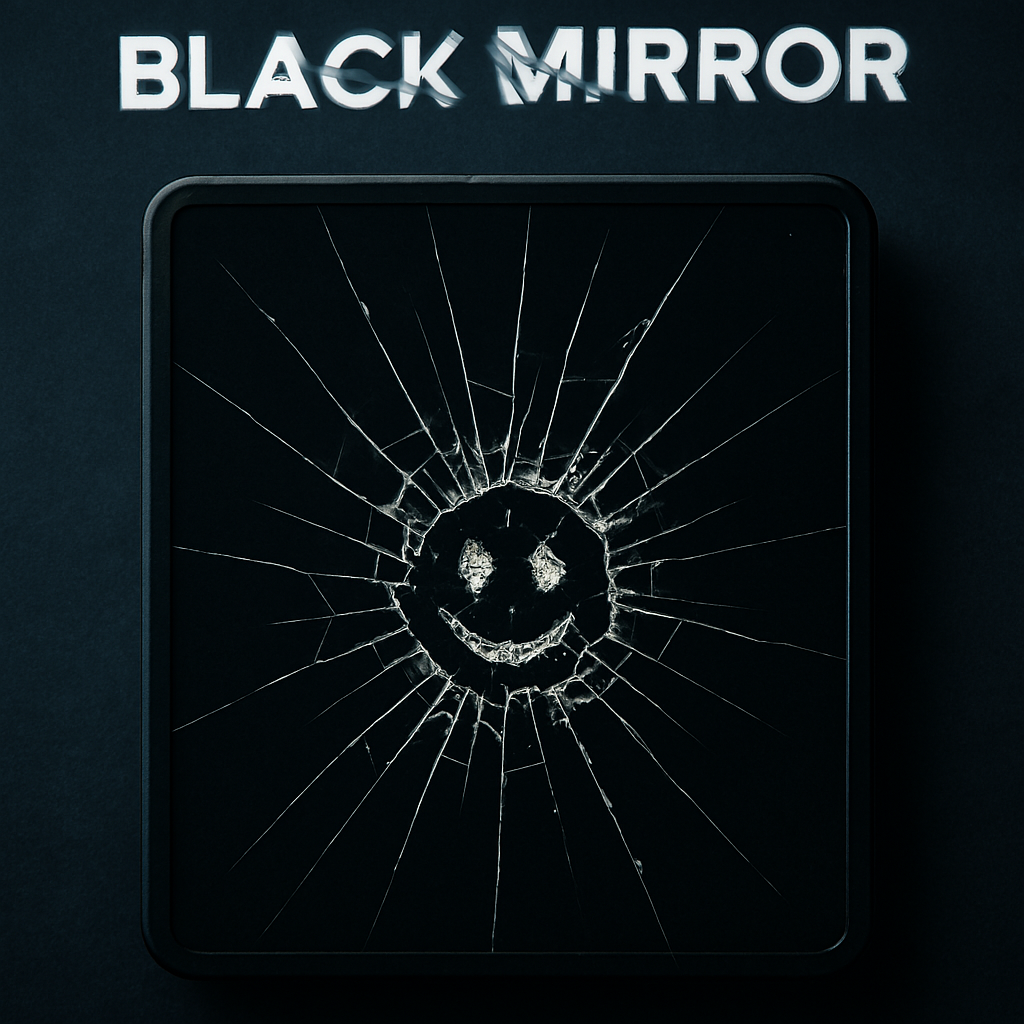
Please also enjoy the unique and beautiful movie posters featured here — not copied from the internet, but custom generated using AI based on my input.
Movie Highlight – 2001: A Space Odyssey (1968)
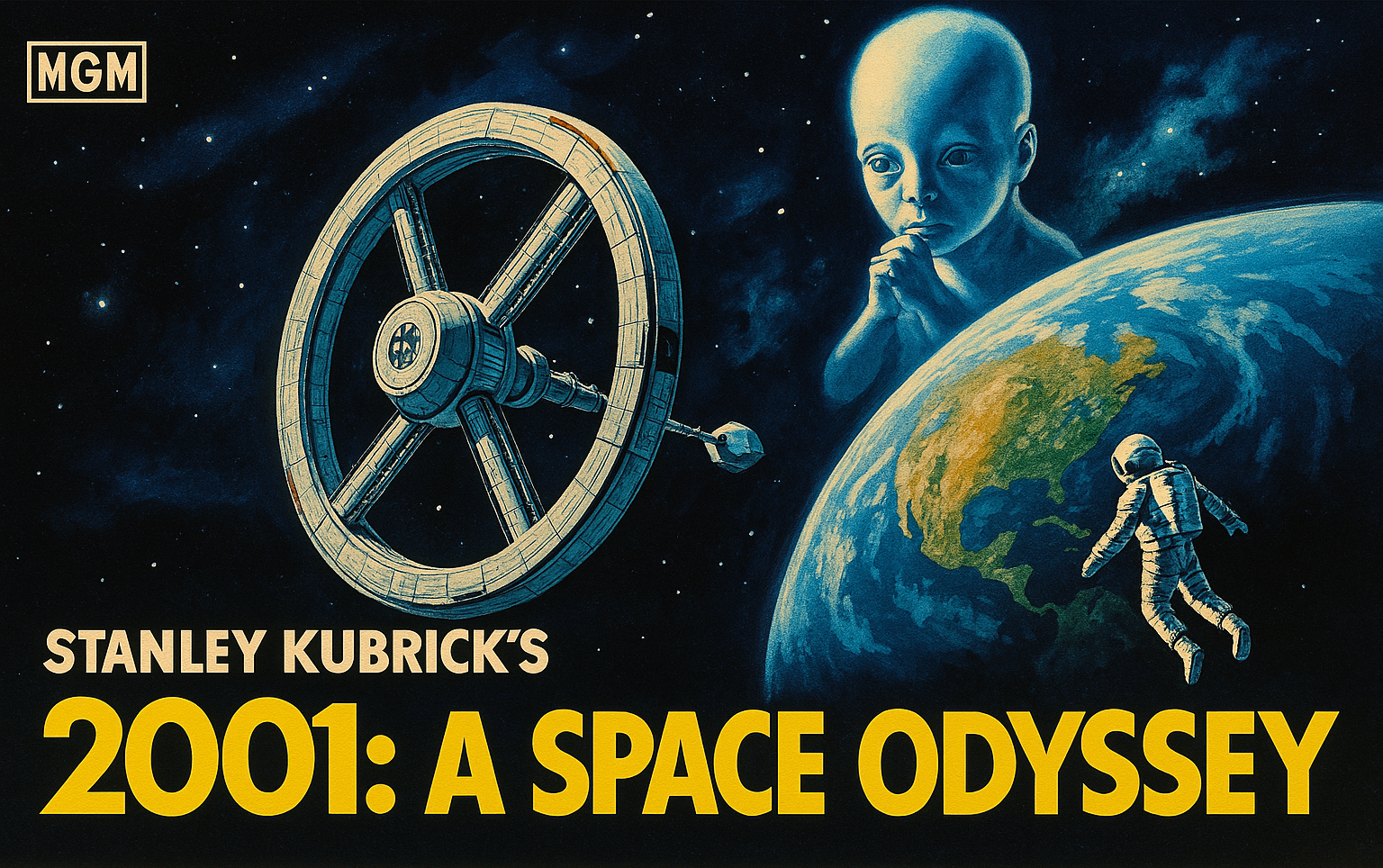
Originally written by Arthur C. Clarke and directed by Stanley Kubrick, 2001: A Space Odyssey is well ahead of its time. By looking at the cinematography, it’s hard to believe it was created in the 1960s.
The movie illustrates the transition of mankind from ape men to modern, “smart” humans — a journey of cognitive evolution. Yet it proposes that this leap wasn’t purely evolutionary, but influenced by extraterrestrial intervention.
This isn’t just a science fiction film — it’s a meditation on humanity, aliens, and even God. Despite never showing an alien form (except the monolith), the film radiates an overwhelming extraterrestrial presence. We almost watch the entire narrative unfold through the eyes of the monolith, phase by phase.
The photography and direction are masterpieces. The final scene — one of my all-time favorites — elegantly reinforces how insignificant mankind is in the vastness of the universe. The visual of the Star Child gazing upon Earth is both haunting and poetic.
Overall, this film is far more than science fiction; it is pure cinematic philosophy.
| # | Movie | Directed By | Year |
|---|---|---|---|
| 1 | 2001: A Space Odyssey | Stanley Kubrick | 1968 |
| 2 | The Shining | Stanley Kubrick | 1980 |
| 3 | Citizen Kane | Orson Welles | 1941 |
| 4 | Schindler’s List | Steven Spielberg | 1993 |
| 5 | The Godfather (I & II) | Francis Ford Coppola | 1972 / 1974 |
| 6 | Casablanca | Michael Curtiz | 1942 |
| 7 | The Pianist | Roman Polanski | 2002 |
| 8 | The Departed | Martin Scorsese | 2006 |
| 9 | No Country for Old Men | Joel and Ethan Coen | 2007 |
| 10 | Life is Beautiful | Roberto Benigni | 1997 |
| 11 | Fight Club | David Fincher | 1999 |
| 12 | A Fistful of Dollars
For A few Dollars More The Good, The Bad and The Ugly |
Sergio Leone | 1964
1965 1966 |
| 13 | Dr. Strangelove or: How I Learned to Stop Worrying and Love the Bomb | Stanley Kubrick | 1964 |
| 14 | Vertigo | Alfred Hitchcock | 1958 |
| 15 | The Hurt Locker | Kathryn Bigelow | 2008 |
| 16 | Inglourious Basterds | Quentin Tarantino | 2009 |
| 17 | Pulp Fiction | Quentin Tarantino | 1994 |
| 18 | Forrest Gump | Robert Zemeckis | 1994 |
| 19 | Eternal Sunshine of the Spotless Mind | Michel Gondry | 2004 |
| 20 | The Matrix | The Wachowskis | 1999 |
Movie Highlight – Citizen Kane (1941)
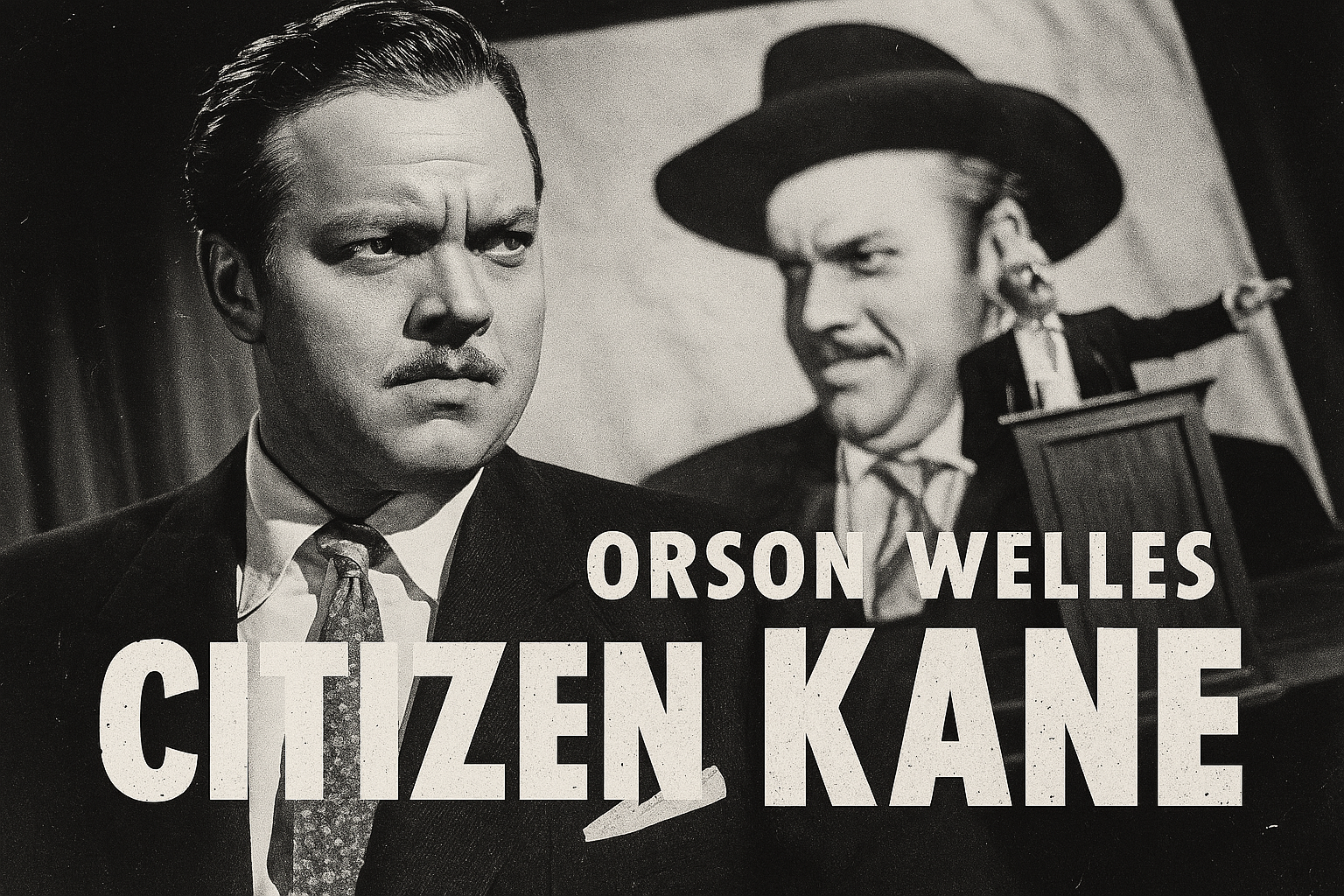
With its non-linear narrative and groundbreaking cinematography, Citizen Kane was far ahead of its time. Orson Welles redefined how stories could be told on screen — structurally and visually — making this film a benchmark in cinematic innovation.
But beyond its technical mastery, the film delivers layered human insights. At its core, it’s about the complexity of the human character — how we are all multi-dimensional beings that cannot be captured in a single narrative. It shows how easy it is to reduce a person to a public persona, while missing the private storms, memories, and longings that define them.
The theme of lost innocence runs deep. No matter how powerful or successful a person becomes, there’s a child within — often unheard, sometimes silently screaming. That iconic whisper — “Rosebud” — is more than just a plot device; it’s a profound echo of forgotten longing.
Citizen Kane reminds us how flawed and incomplete our judgments of others can be. It’s a singular piece of cinema that questions not just the man, but the lens through which we choose to view him. No wonder it continues to be celebrated as one of the greatest films ever made.
| # | Movie | Directed By | Year |
|---|---|---|---|
| 21 | There Will Be Blood | Paul Thomas Anderson | 2007 |
| 22 | Sunset Boulevard | Billy Wilder | 1950 |
| 23 | In the Heat of the Night | Norman Jewison | 1967 |
| 24 | Judgment at Nuremberg | Stanley Kramer | 1961 |
| 25 | Psycho | Alfred Hitchcock | 1960 |
| 26 | Chinatown | Roman Polanski | 1974 |
| 27 | To Kill a Mockingbird | Robert Mulligan | 1962 |
| 28 | Roman Holiday | William Wyler | 1953 |
| 29 | Unforgiven | Clint Eastwood | 1992 |
| 30 | 12 Monkeys | Terry Gilliam | 1995 |
| 31 | The Bridge on the River Kwai | David Lean | 1957 |
| 32 | The Truman Show | Peter Weir | 1998 |
| 33 | Lawrence of Arabia | David Lean | 1962 |
| 34 | Zodiac | David Fincher | 2007 |
| 35 | Get Out | Jordan Peele | 2017 |
| 36 | Saving Private Ryan | Steven Spielberg | 1998 |
| 37 | Sully | Clint Eastwood | 2016 |
| 38 | Se7en | David Fincher | 1995 |
| 39 | Awakenings | Penny Marshall | 1990 |
| 40 | Shutter Island | Martin Scorsese | 2010 |
Movie Highlight – Dr. Strangelove (1964)
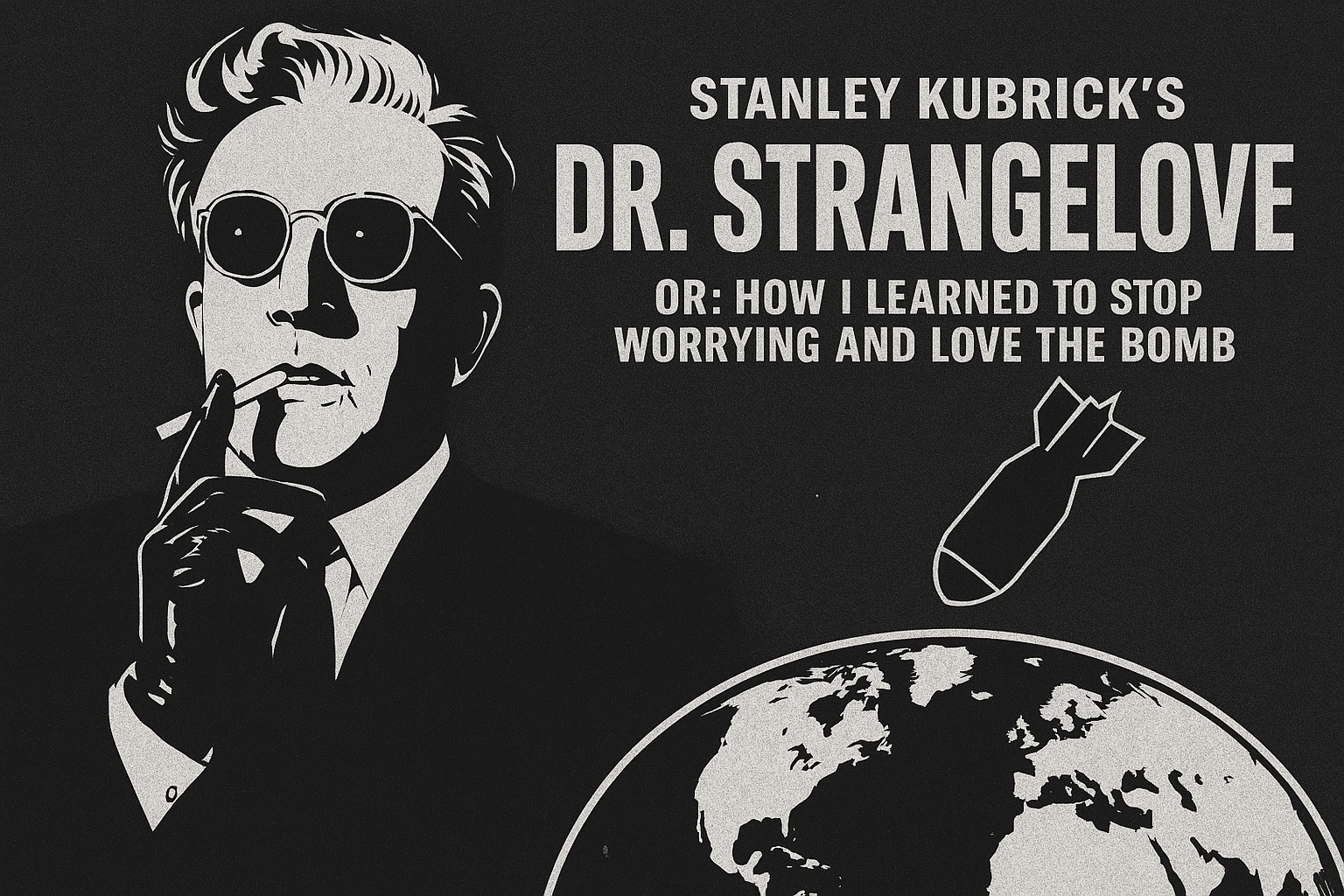
Directed by Stanley Kubrick, Dr. Strangelove or: How I Learned to Stop Worrying and Love the Bomb is a masterclass in dark satire. What makes the film timeless is how it uses absurdity and humor to expose one of humanity’s most terrifying realities — the threat of nuclear annihilation driven not by enemies, but by incompetence, paranoia, and protocol.
Beneath its humor lies a razor-sharp political commentary. The film dismantles the illusion of control we often associate with military power and government. The characters — from the cigar-chomping generals to the war room scientists — are exaggerated, but not far from the truth. In fact, their exaggerated flaws reveal the uncomfortable truth: sometimes the systems we trust the most are governed by fragile egos, blind nationalism, and unpredictable human errors.
Kubrick’s framing and use of stark black-and-white elevate the satire to near-tragic proportions. The War Room, the Doomsday Machine, and Peter Sellers’ triple-role performance — all contribute to a film that is funny, frightening, and thought-provoking in equal measure.
The ending song “We’ll Meet Again” by Vera Lynn cannot be more appropriate, and adds a chill to the spine as the world quietly ends — not with a scream, but with a haunting melody.
| # | Movie | Directed By | Year |
|---|---|---|---|
| 41 | The Irishman | Martin Scorsese | 2019 |
| 42 | Silence | Martin Scorsese | 2016 |
| 43 | Raging Bull | Martin Scorsese | 1980 |
| 44 | Back to the Future | Robert Zemeckis | 1985 |
| 45 | Mank | David Fincher | 2020 |
| 46 | All Quiet on the Western Front | Edward Berger | 2022 |
| 47 | Barry Lyndon | Stanley Kubrick | 1975 |
| 48 | Ford v Ferrari | James Mangold | 2019 |
| 49 | Million Dollar Baby | Clint Eastwood | 2004 |
| 50 | A Clockwork Orange | Stanley Kubrick | 1971 |
| 51 | Gravity | Alfonso Cuarón | 2013 |
| 52 | Interstellar | Christopher Nolan | 2014 |
| 53 | Taxi Driver | Martin Scorsese | 1976 |
| 54 | 12 Angry Men | Sidney Lumet | 1957 |
| 55 | The Apartment | Billy Wilder | 1960 |
| 56 | Goodfellas | Martin Scorsese | 1990 |
| 57 | Blade Runner | Ridley Scott | 1982 |
| 58 | Blade Runner 2049 | Denis Villeneuve | 2017 |
| 59 | The Reader | Stephen Daldry | 2008 |
| 60 | Birdman | Alejandro G. Iñárritu | 2014 |
Movie Highlight – The Shining (1980)
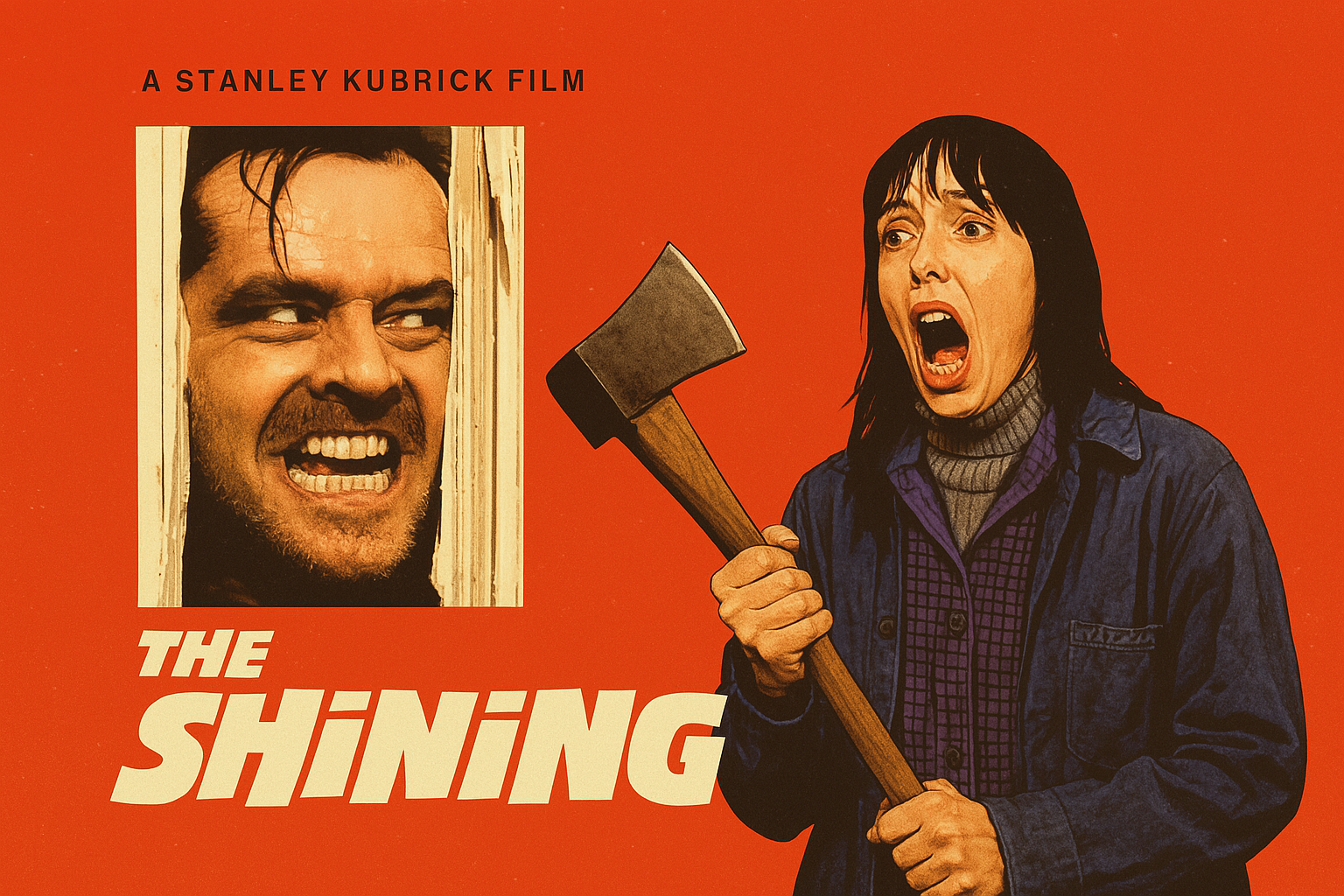
I love this film — and I’m not quite sure why. Perhaps that’s the brilliance of The Shining. It feels like it’s whispering something important, something cosmic… and yet, you can’t quite hear it clearly. You feel it more than you understand it — and that’s what makes it unforgettable.
Directed by Stanley Kubrick, The Shining is often labeled as a horror film, but reducing it to that genre feels unfair. It’s psychological, existential, conspiratorial — and visually hypnotic. Every frame is meticulously composed, every hallway drenched in foreboding silence, every slow zoom charged with tension.
And then there are the theories . Was Kubrick trying to embed a message about the moon landing? Was it all about genocide? Trauma? Madness? The truth may be buried under layers, just like the Overlook Hotel itself. And yes, even the name — “Overlook” — makes you wonder: what are we overlooking?
That final photograph is my second favorite ending in cinema — right after *2001: A Space Odyssey*. Is Jack a reincarnation? A trapped spirit? An eternal caretaker? The ambiguity is not a bug, it’s a feature — and it leaves you endlessly haunted.
The Shining isn’t meant to be solved. It’s meant to be felt — slowly, eerily, permanently. After all, you cannot solve all the puzzles around you .
| # | Movie | Directed By | Year |
|---|---|---|---|
| 61 | Hell or High Water | David Mackenzie | 2016 |
| 62 | Reservoir Dogs | Quentin Tarantino | 1992 |
| 63 | Munich | Steven Spielberg | 2005 |
| 64 | Oppenheimer | Christopher Nolan | 2023 |
| 65 | Joker | Todd Phillips | 2019 |
| 66 | Her | Spike Jonze | 2013 |
| 67 | Terminator 2: Judgment Day | James Cameron | 1991 |
| 68 | The Seventh Seal | Ingmar Bergman | 1957 |
| 69 | Kramer vs. Kramer | Robert Benton | 1979 |
| 70 | Still Alice | Richard Glatzer, Wash Westmoreland | 2014 |
| 71 | Escape from Alcatraz | Don Siegel | 1979 |
| 72 | Zero Dark Thirty | Kathryn Bigelow | 2012 |
| 73 | Once Upon a Time in America | Sergio Leone | 1984 |
| 74 | Once Upon a Time in Hollywood | Quentin Tarantino | 2019 |
| 75 | Cast Away | Robert Zemeckis | 2000 |
| 76 | The Birds | Alfred Hitchcock | 1963 |
| 77 | The Power of the Dog | Jane Campion | 2021 |
| 78 | The Silence of the Lambs | Jonathan Demme | 1991 |
| 79 | The Usual Suspects | Bryan Singer | 1995 |
| 80 | American Beauty | Sam Mendes | 1999 |
Movie Highlight – Fight Club (1999)
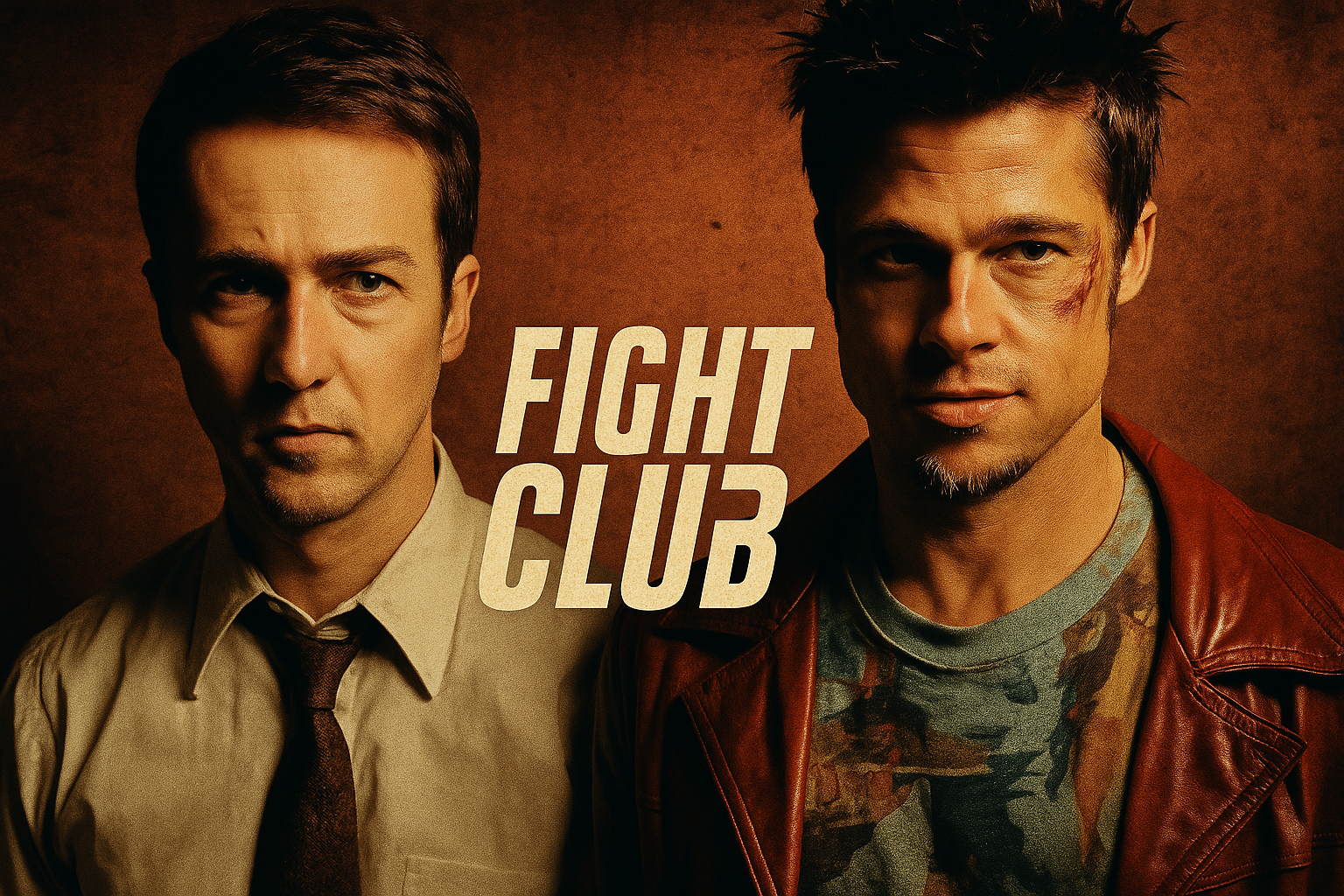
Fight Club is not just a film — it’s a rebellion in celluloid. David Fincher crafts a raw, hypnotic narrative that punches through the polished layers of modern life and exposes the emptiness lurking underneath. It’s brutal, chaotic, and yet philosophically introspective in a way few films dare to be.
The movie dismantles the very idea of identity — of what defines a man in a consumer-driven society. The narrator’s existential crisis is hauntingly familiar to anyone who’s ever questioned their place in the modern machine. Tyler Durden isn’t just a character — he’s a concept, an alter ego born from suppressed rage, freedom, and the desire to destroy what society has told us we must become.
The film also explores toxic masculinity, the cult of chaos, and the search for meaning through destruction. It plays with duality — real vs. imagined, self vs. ego, and order vs. anarchy — in ways that make every rewatch more revealing than the last.
That final scene, with buildings collapsing to the tune of The Pixies’ “Where Is My Mind?”, is a poetic mic drop.
Fight Club is not about fighting. It’s about the fight within — and once you’ve seen it, you can’t miss the cracks in the world it exposes.
| # | Movie | Directed By | Year |
|---|---|---|---|
| 81 | The Imitation Game | Morten Tyldum | 2014 |
| 82 | Annie Hall | Woody Allen | 1977 |
| 83 | Wild Strawberries | Ingmar Bergman | 1957 |
| 84 | Looper | Rian Johnson | 2012 |
| 85 | Good Will Hunting | Gus Van Sant | 1997 |
| 86 | The Revenant | Alejandro G. Iñárritu | 2015 |
| 87 | Eyes Wide Shut | Stanley Kubrick | 1999 |
| 88 | A Passage to India | David Lean | 1984 |
| 89 | Anatomy of a Fall | Justine Triet | 2023 |
| 90 | Roma | Alfonso Cuarón | 2018 |
| 91 | Philadelphia | Jonathan Demme | 1993 |
| 92 | The 39 Steps | Alfred Hitchcock | 1935 |
| 93 | Stalker | Andrei Tarkovsky | 1979 |
| 94 | The Sixth Sense | M. Night Shyamalan | 1999 |
| 95 | Unbreakable | M. Night Shyamalan | 2000 |
| 96 | Manhattan | Woody Allen | 1979 |
| 97 | Persona | Ingmar Bergman | 1966 |
| 98 | A Beautiful Mind | Ron Howard | 2001 |
| 99 | The Pursuit of Happyness | Gabriele Muccino | 2006 |
| 100 | The Boy in the Striped Pyjamas | Mark Herman | 2008 |
Movie Highlight – No Country for Old Men (2007)
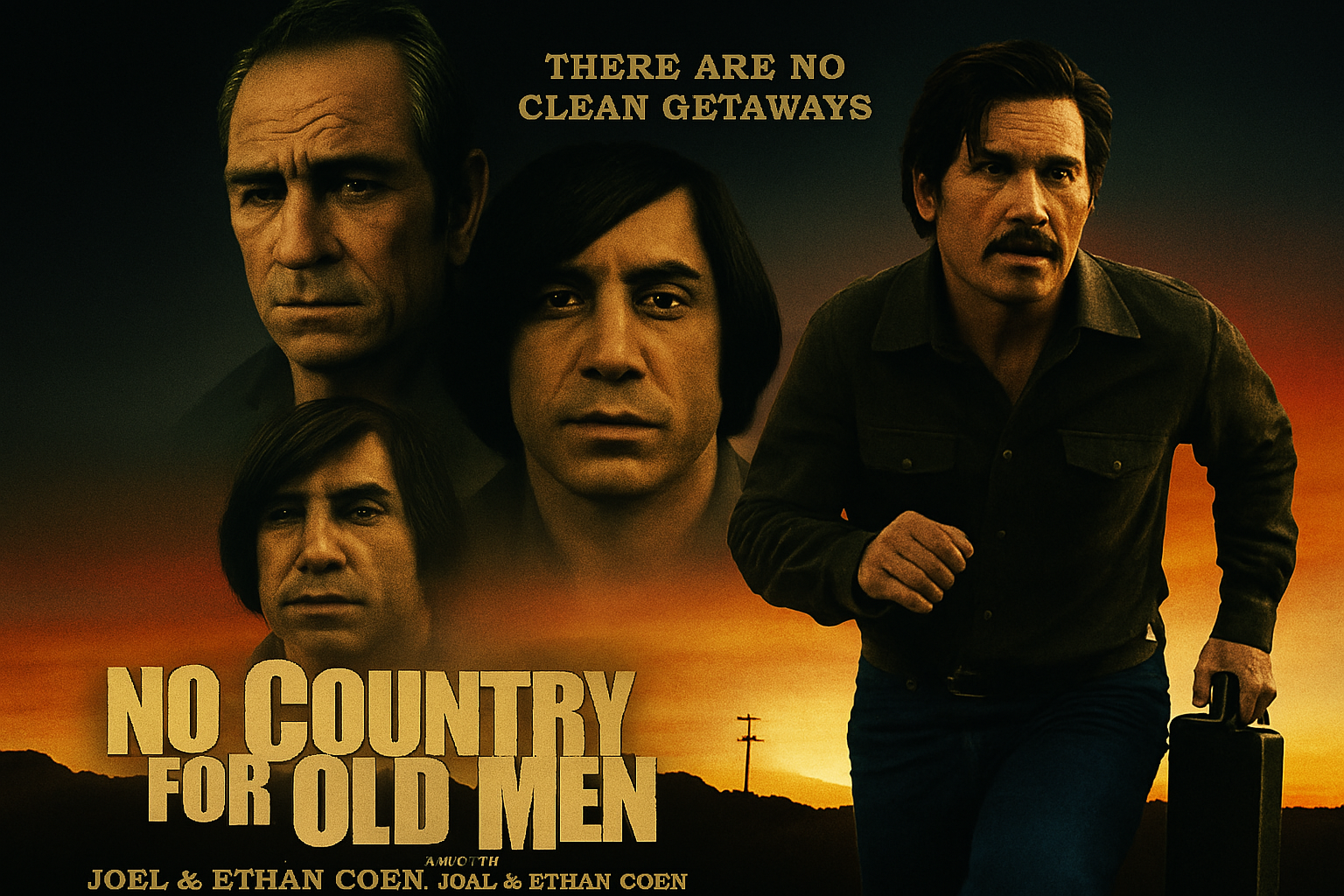
This isn’t just a chase movie. It’s a meditation on inevitability, aging, and moral erosion. The Coen brothers crafted something far deeper than a standard thriller — a haunting modern Western that unfolds like a fable of fate.
Tommy Lee Jones’ aging sheriff serves as a mirror to the harsh truth many face with time: that the world no longer operates by the same rules they once understood. His weariness reflects the unsettling realization that as you grow older, the world becomes faster, meaner, and more unpredictable — and the younger generation seems to operate by codes you no longer recognize.
And then there’s Anton Chigurh. Javier Bardem’s portrayal is, without exaggeration, one of the greatest villains in cinema history. Cold, methodical, and almost mythic in his presence, Chigurh is less a man and more a force — a symbol of chaos disguised in the face of calm.
The cinematography is stark and poetic, the tension quietly builds until it claws at you, and the moral questions linger long after the final scene. What is justice? What is evil? And when does the law stop making sense?
No Country for Old Men is not a film that shouts — it whispers hard truths into your ears. It’s unsettling, elegant, and timeless. A true cult classic.
Movie Highlight – Vertigo (1958)
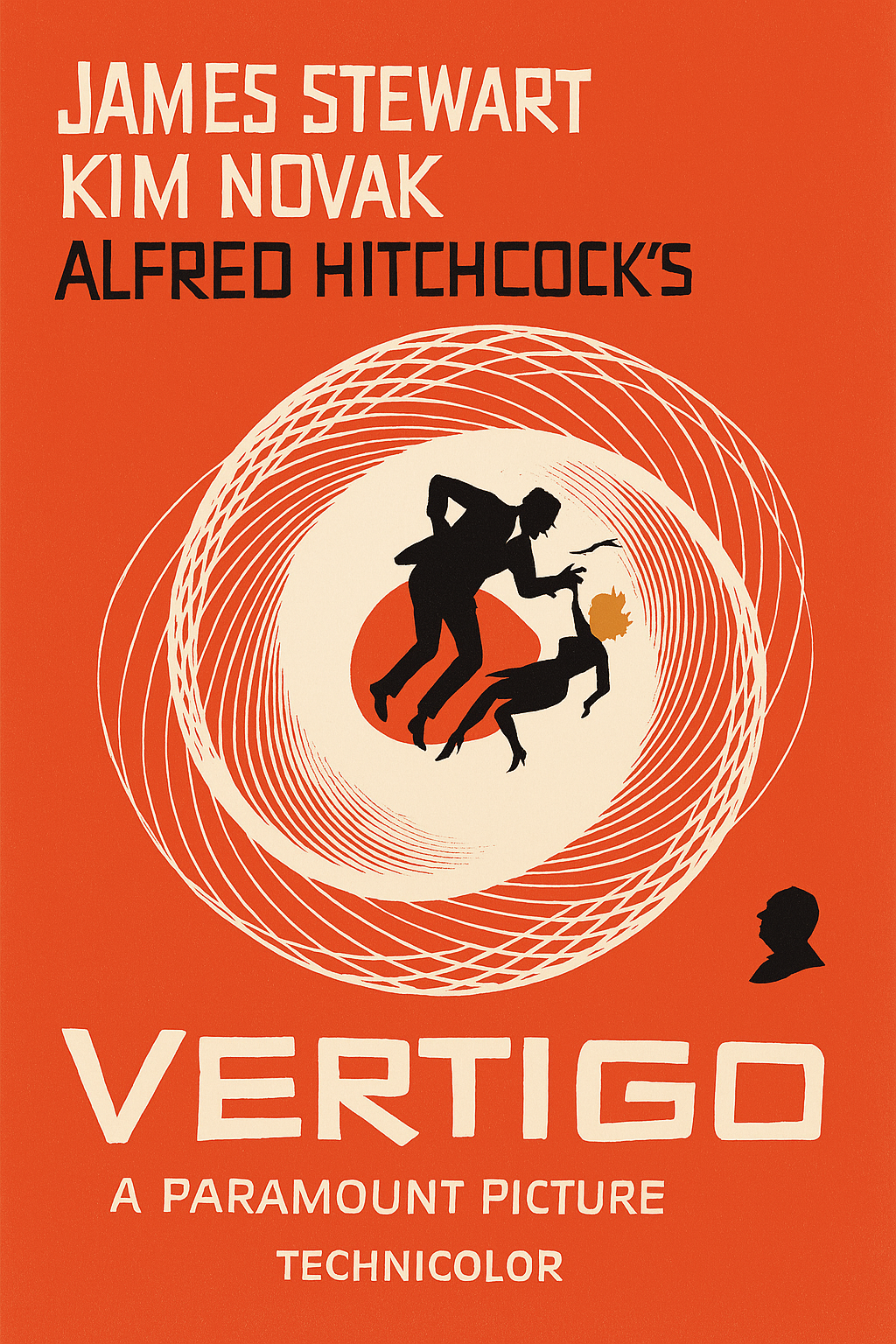
The story follows Scottie, a man paralyzed by his own fear — a former detective whose acrophobia mirrors his emotional instability. He’s a passive observer in his own life, until Madeleine appears. She is ethereal, haunting, lost — and carefully crafted. Madeleine is not just a character. She is a construct. A performance. And Hitchcock makes us fall for her, just as Scottie does, before cruelly revealing the layers beneath her perfection.
Kim Novak’s performance as Madeleine (and Judy) is both vulnerable and unsettling. She’s a woman torn between playing the part she’s been asked to perform and becoming the fantasy she knows she represents. Her sadness is palpable — especially in the tree rings scene, the sense of past lives, time looping endlessly, as if she knows her existence is already ghostly.
Hitchcock directs with unnerving precision. The use of color — green for illusion and rebirth, red for trauma and reality — is deliberate and symbolic. The famous dolly zoom that simulates vertigo doesn’t just simulate a fear of heights; it captures the disorientation of a man losing his grip on reality.
The film’s ending doesn’t bring closure — it opens a void. Scottie finally “gets” Madeleine — but only after reconstructing her, piece by piece, into a memory. And in the end, he loses her again. Just like his control. Just like his sanity.
Vertigo is Hitchcock at his most vulnerable, his most philosophical. It’s a film about how we try to conquer time, death, and loss by recreating — and in doing so, destroy what was real to begin with.
The question it leaves us with is chilling: Was Scottie ever in love with Madeleine… or with the idea of her?
Cinema is an ever-evolving relationship, and some masterpieces demand time, context, and readiness. Below are a few films I plan to watch (or revisit) as I continue to explore the depths of storytelling and visual philosophy.
-
-
-
The Deer Hunter (Michael Cimino, 1978)
-
One Flew Over the Cuckoo’s Nest (Milos Forman, 1975)
-
Breakfast at Tiffany’s (Blake Edwards, 1961)
-
Mulholland Drive (David Lynch, 2001)
-
Requiem for a Dream (Darren Aronofsky, 2000)
-
The Double Life of Véronique (Krzysztof Kieślowski, 1991)
-
Synecdoche, New York (Charlie Kaufman, 2008)
-
-
🌀 Also, I plan to rewatch several Ingmar Bergman films — particularly Persona, The Seventh Seal, and Wild Strawberries — to fully absorb their philosophical layers. These are not just films; they are meditative experiences that unfold differently each time you engage with them.
I prefer movies over TV shows or web series — mainly because web series demand more time and continuity. I’m not a binge-watcher, simply because I don’t have that kind of time, and I don’t want to get into the habit of late-night marathons.
That said, I haven’t ignored web series completely. Over the last 10 years, I’ve watched quite a few, and some of them are definitely worth mentioning. Below is a list of the web series I’ve truly enjoyed. Some have real depth — like Mindhunter or Dark — while others are just exceptionally well-made.
Breaking Bad is widely considered one of the best TV shows of all time — and for good reason. Its spin-off prequel about Saul Goodman (Better Call Saul) might be even better.
Black Mirror paints a picture of the near future — a future ruled by technology, one that’s already unfolding around us.
Coming to Squid Game — it may not have the depth of Mindhunter or Dark, but the concept is unique, and each episode is crafted in a way that makes it hard to stop watching. There’s also a loud and clear message running through it: you can make people do almost anything by showing them money.
| # | Series | Creator / Director | OTT Platform |
|---|---|---|---|
| 1 | Breaking Bad | Created by Vince Gilligan, various directors | Netflix |
| 2 | Better Call Saul | Created by Vince Gilligan & Peter Gould, various directors | Netflix |
| 3 | Black Mirror | Created by Charlie Brooker, various directors | Netflix |
| 4 | Yes Minister | Sydney Lotterby (majority of episodes) | BBC / Various |
| 5 | Mindhunter | Created by Joe Penhall, various directors incl. David Fincher | Netflix |
| 6 | Dark | Baran bo Odar (all episodes) | Netflix |
| 7 | Tokyo Trial | Rob W. King, Pieter Verhoeff | Netflix |
| 8 | Narcos | Created by Chris Brancato, Carlo Bernard, Doug Miro, various directors | Netflix |
| 9 | Fauda | Created by Lior Raz, Avi Issacharoff, various directors | Netflix |
| 10 | The Serpent | Tom Shankland, Hans Herbots | Netflix |
| 11 | The Spy | Gideon Raff (all episodes) | Netflix |
| 12 | Chernobyl | Johan Renck (all episodes) | HBO |
Disclaimer & Image Rights:
All posters and visual artworks featured on this page are original creations, generated with the assistance of AI tools based on prompts and creative direction provided by me.
These images are not sourced from the Internet, and do not replicate copyrighted material from studios or distributors. They are designed to reflect the thematic essence of the films in a stylistic and transformative way.
All visual content on this page is protected under copyright and may not be used, reproduced, or redistributed without prior permission.
 Subhro.blog