Capacity Planning in Azure Kubernetes Service

Capacity management and autoscaling in Azure Kubernetes Service (AKS) are crucial components in ensuring that your Kubernetes cluster remains responsive, cost-efficient, and scalable to meet varying workloads.

Managing these elements effectively requires a holistic approach that integrates considerations from both the Kubernetes layer (application-focused) and the underlying cloud platform layer (infrastructure-focused).

This article delves into the key aspects of Kubernetes capacity management and autoscaling, offering insights into best practices and strategic decision-making to optimize your AKS environment.
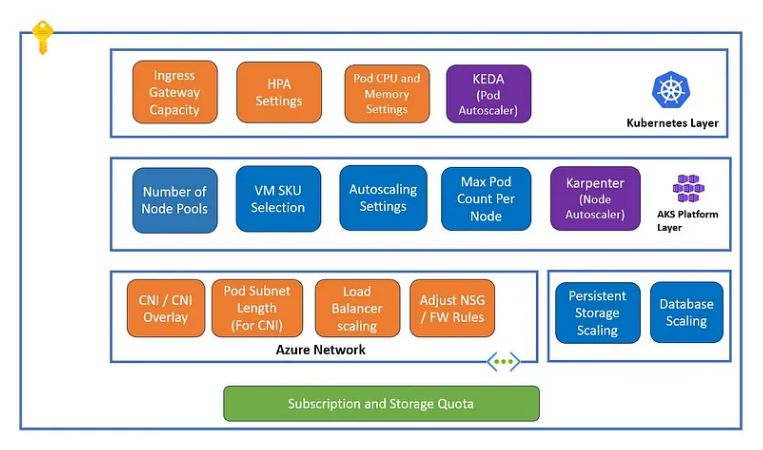
Continue reading “Capacity Planning in Azure Kubernetes Service”

The Kubernetes Story

In today’s fast-paced digital landscape, the demands on software development have never been greater. Organizations are expected to deliver features rapidly, scale their applications efficiently, and ensure high availability across increasingly complex environments. Traditional monolithic architectures, once the backbone of enterprise applications, have struggled to keep pace with these demands. The emergence of microservices, container technology, and orchestration tools like Kubernetes has fundamentally transformed how modern applications are built, deployed, and managed.

This post explores the rise of microservices, the evolution of containerization, and the pivotal role of Kubernetes in orchestrating modern cloud-native applications. We will dive into the reasons why Kubernetes has become the industry standard, discuss its advantages and disadvantages in depth, and present real-life examples of organizations that have successfully transitioned to Kubernetes to achieve greater agility, scalability, and innovation.


Continue reading “The Kubernetes Story”

Crafting the Perfect Dockerfile : Customization Techniques for Every Project

Introduction : Beyond the Basics of Dockerfile Creation

Creating a Dockerfile is often one of the first steps in containerizing an application. But while it’s easy to start with a basic Dockerfile, the real power of Docker lies in the ability to customize and optimize these files to perfectly suit your project’s needs.

In this article, we’ll dive deep into the art of Dockerfile customization, exploring how small tweaks and thoughtful adjustments can lead to more efficient, secure, and maintainable containers. Whether you’re a Docker novice or a seasoned pro, these customization techniques will help you craft Dockerfiles that do more than just work — they’ll make your containers sing.

Continue reading “Crafting the Perfect Dockerfile : Customization Techniques for Every Project”